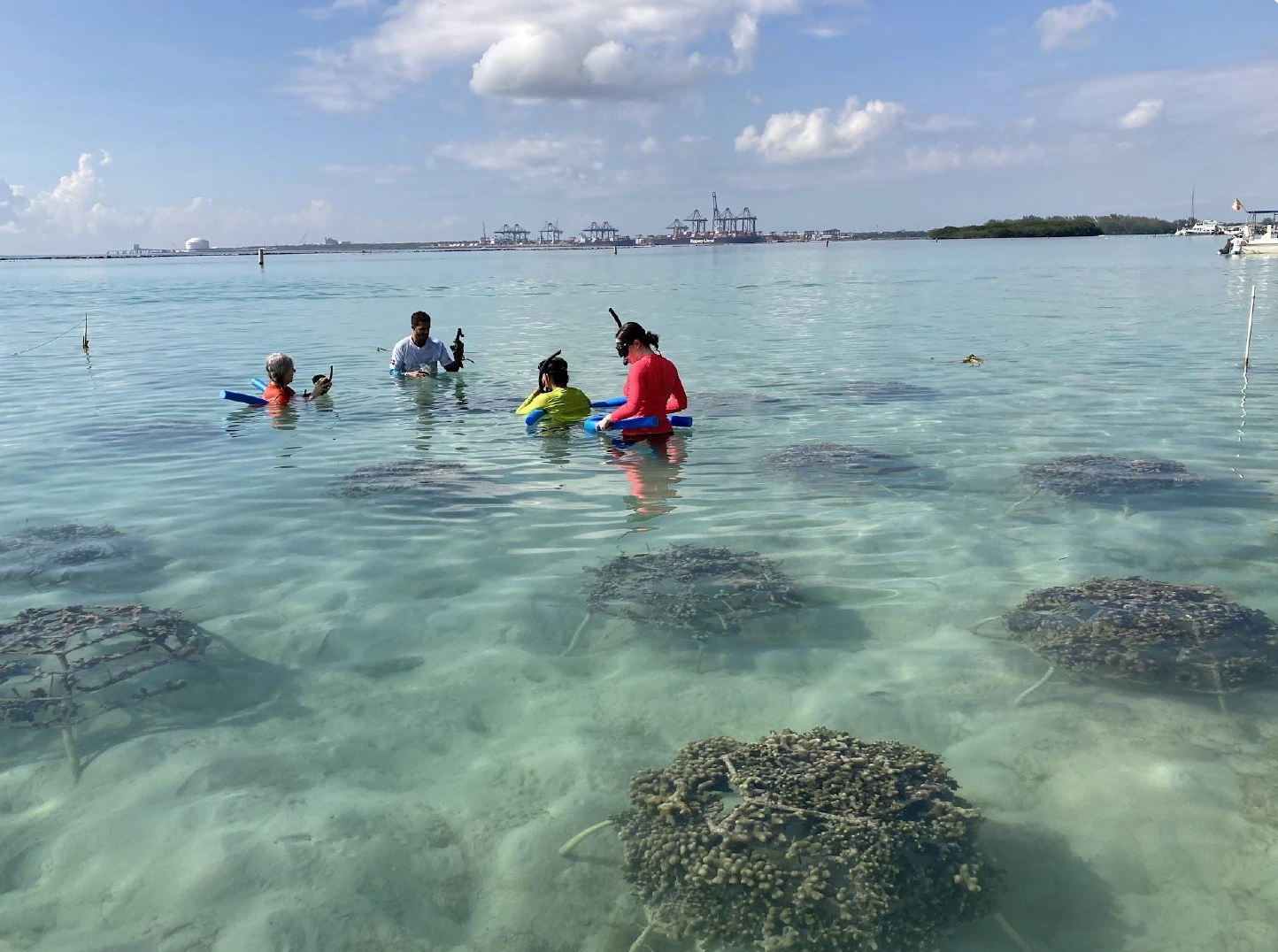
Conservation volunteer work abroad that is actual field labor: coral nurseries, turtle beaches, ecological restoration, and wildlife research, alongside the people who manage these sites every week of the year.
Conservation volunteer work at Help2Serve.Care is field labor attached to a long-running research or restoration program. As a participant in our Signature 21-Day Immersion Experience—offered on pre-published dates (non-customized)—your journey begins with Phase One: fourteen days immersed in a project, not simply visiting one. For two weeks, you become part of its workforce. The data you collect goes into the same dataset the site has been building for years.
Depending on destination, a conservation-focused Phase One can include coral nursery maintenance and out-planting, sea turtle nest monitoring, ecological restoration, and wildlife research, native species reforestation and nursery work, invasive species removal, trail and boardwalk construction that protects fragile habitat, wildlife sanctuary husbandry and enclosure work, and biodiversity surveys and transect data collection.
The Dominican Republic and Costa Rica lean marine and tropical — coral, mangrove, turtle, and rainforest. Belize adds barrier-reef and marine work alongside terrestrial conservation with species you will not encounter anywhere else. Belize is built around the Mesoamerican Barrier Reef, the second-largest reef system on earth.
Conservation work is physical, weather-dependent and frequently unglamorous. Cohorts move earth, carry timber, pull invasive vine, and count things. It is also, by a wide margin, the focus area our alumni most often say redirected their degree — partly because the results are visible within the fortnight, and partly because you are working next to people who have made this their entire career.
For faculty leading environmental science, marine biology, sustainability or ecology cohorts, these sites support structured data collection, and project scope can be negotiated in advance against your course outcomes.
Conservation projects are set by community priorities and by partners whose roots in the region go back decades — not by what makes a good photograph.
Fragment, tend, and out-plant coral into reefs that are actively being rebuilt.
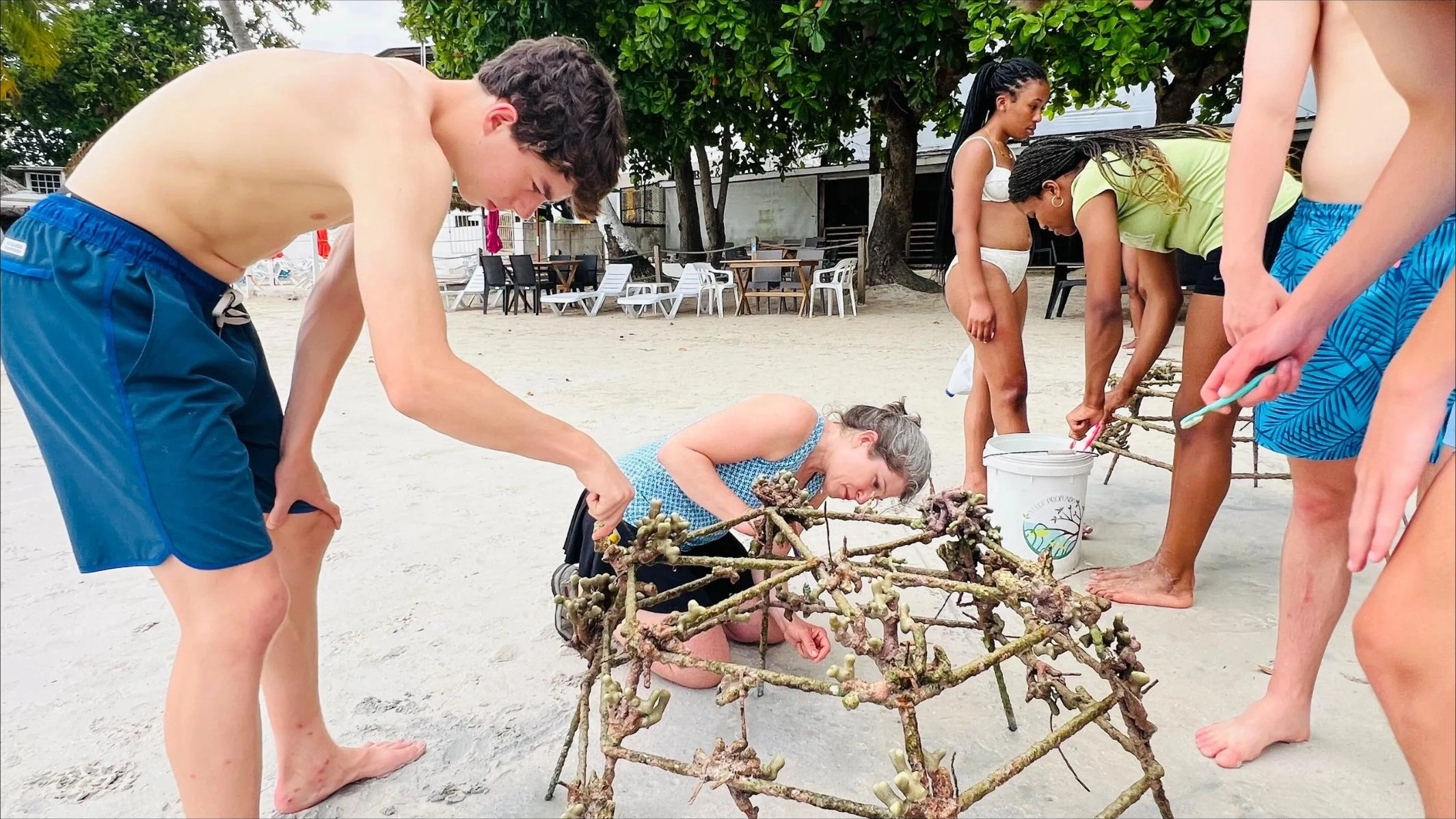
Coral nurseries need constant maintenance — cleaning, monitoring growth, and transplanting mature fragments. Cohorts are trained on site and work under the direction of the marine team that runs the program year-round.
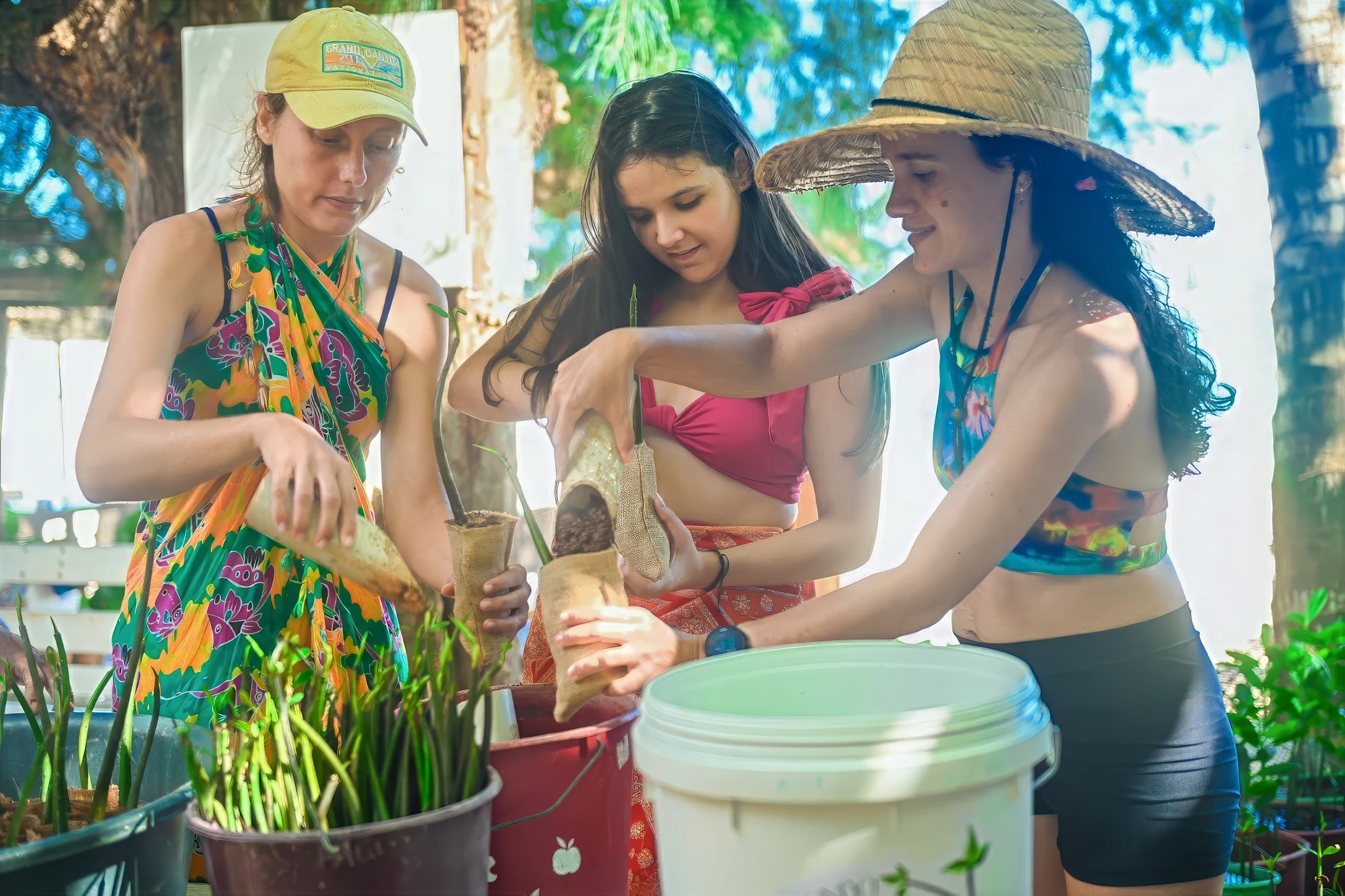
Habitat restoration, biodiversity monitoring, and field research supporting the recovery and long-term protection of local ecosystems.
Fieldwork follows the needs of the environment, not a fixed routine — expect early starts, changing conditions, and hands-on work alongside local conservation teams. The habitat and wildlife data your cohort helps collect contributes to ongoing research, restoration planning, and longer-term ecosystem protection.
Boardwalks, trails and revegetation that keep foot traffic off fragile ground.
It looks like construction because it is. Boardwalks, erosion control and native planting are the unglamorous infrastructure that lets a protected site stay protected while remaining open to people.
No. Cohorts mix environmental science and marine biology students with people from completely unrelated majors. Field training happens on site. What matters more is physical willingness — conservation days involve heat, water, mud and repetitive work.
Not for most work. Coral and reef activities are structured so that snorkel-level participants have a full role, and dive-certified participants can take on additional tasks where the site permits. Certification requirements vary by destination and season, so ask before you plan around it.
More than most people expect. Anticipate several hours of outdoor labor daily in heat and humidity, with early starts. There is a role for every fitness level, and in-country staff adjust assignments, but this is not a light-duty focus area.
Frequently, yes — but it must be arranged in advance. Site partners can support structured data collection when they know what you need before the cohort arrives. Faculty-led groups have the most flexibility here. Contact us at least one full semester ahead.
Costa Rica focuses on wildlife and habitat conservation. The Dominican Republic focuses on coral and coastal restoration. Belize centers on the Mesoamerican Barrier Reef, ecological restoration, and wildlife research.